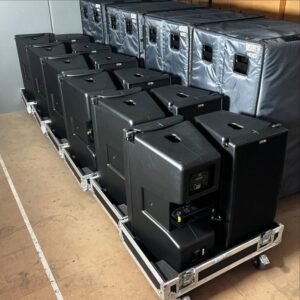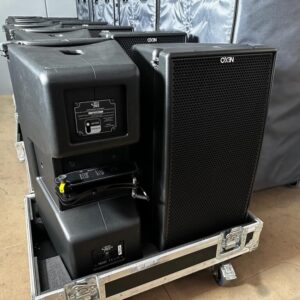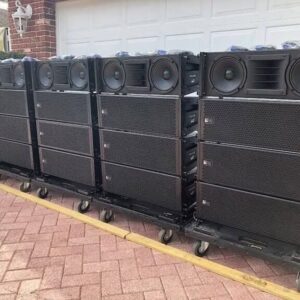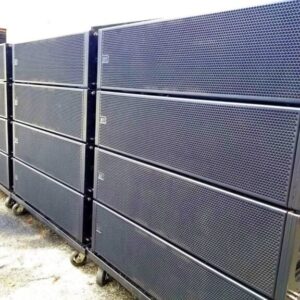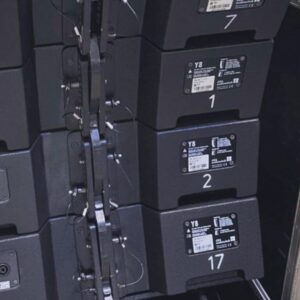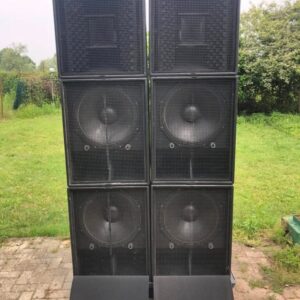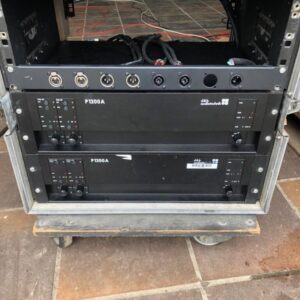
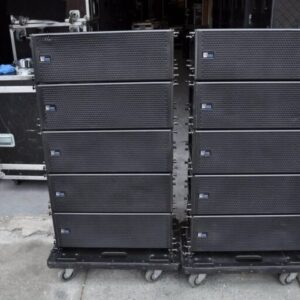
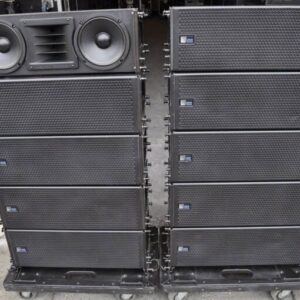
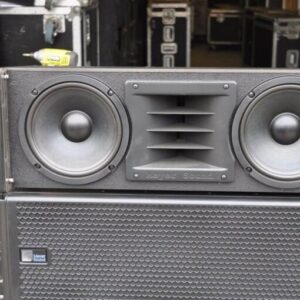
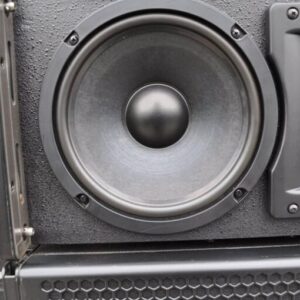
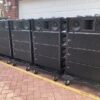
Meyer Sound M’elodie – Full System Block for Professional Audio (Buy or Rent in Europe)
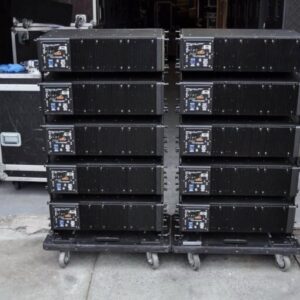
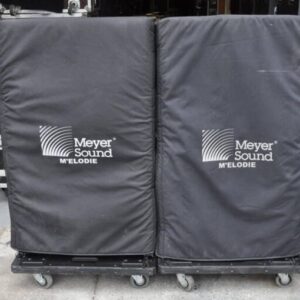
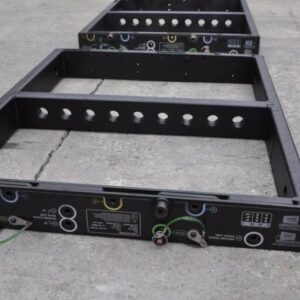
The Meyer Sound M’elodie system is one of the most strategically valuable compact line array systems in the professional audio market—not because it is the newest, but because it is proven, predictable, and engineered for real-world deployment.
Across Europe—where venues vary from tight indoor theaters to open-air event spaces—the challenge is always the same:
How do you deliver consistent sound coverage without overcomplicating the system?
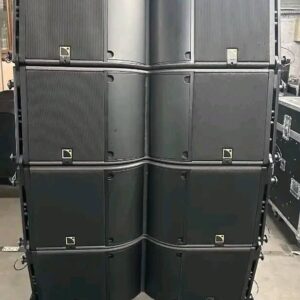
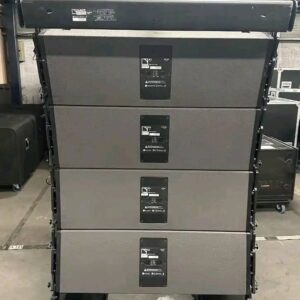
The M’elodie answers that by functioning not as a single loudspeaker, but as a modular system block capable of building controlled, scalable sound environments.
SYSTEM BLOCK DEPTH – WHAT YOU’RE REALLY DEPLOYING
When you deploy M’elodie in a professional context, you are not “installing speakers.”
You are building a coverage architecture.
Typical System Logic:
- Main array (mid-to-far coverage): M’elodie
- Downfill (front audience): M’elodie with tighter angles
- Sub layer: Meyer 1100-LFC or 600-HP
- Control layer: Internal DSP + external prediction via MAPP
What This Solves (Real Problems Engineers Face)
In poorly designed systems:
- Front rows experience aggressive, fatiguing sound
- Mid-field becomes unclear and inconsistent
- Rear audience loses definition and intelligibility
With a properly designed M’elodie array:
- Sound pressure is evenly distributed
- Tonal balance remains consistent across zones
- Engineers spend less time correcting issues and more time refining performance
This is the difference between a system that “works” and a system that delivers professionally every time.
ENGINEERING DETAIL – WHY M’ELODIE PERFORMS THE WAY IT DOES
3-Way Active Design (True System Separation)
The M’elodie uses a 3-way active architecture, meaning:
- Each frequency band has dedicated amplification
- Drivers operate independently but in coordination
- Internal DSP manages crossover and protection
Practical Result:
- Cleaner midrange (critical for vocals and speech)
- Reduced distortion at high levels
- Greater clarity in complex mixes
This is especially important in:
- Corporate presentations
- Live music with dense arrangements
- Speech-heavy environments
Output vs Control – The Real Balance
On paper, ~131 dB peak SPL may look standard.
In practice, what matters is:
- How clean that output remains
- How controlled the dispersion is
- How consistent it feels across the audience
Field Reality:
Many systems can be loud.
Few systems maintain clarity and definition when pushed.
M’elodie is designed to:
- Maintain tonal integrity under load
- Avoid harsh high frequencies
- Keep vocals intelligible at distance
COVERAGE STRATEGY – HOW PROFESSIONALS ACTUALLY USE IT
Horizontal Coverage (Wide but Controlled)
With roughly 100° horizontal dispersion, M’elodie allows:
- Wide audience coverage with fewer cabinets
- Reduced need for side fills
- Simplified system design
Vertical Control (Where Most Systems Fail)
Through curvilinear arraying, engineers can:
- Adjust cabinet angles precisely
- Control sound throw distance
- Avoid overlapping frequency interference
Real Deployment Insight:
In a mid-sized European theater:
- A properly angled M’elodie array eliminated the need for additional delay speakers
- Coverage remained consistent from front row to balcony
This is where the system proves its value—not in specs, but in problem-solving.
SELF-POWERED ARCHITECTURE – OPERATIONAL IMPACT
Both the technical and business advantages of M’elodie come from its self-powered design.
What’s Built Into Each Cabinet:
- Dedicated amplification (~1275 W total)
- Integrated DSP
- RMS monitoring system
What This Changes on Site
Without Self-Powered Systems:
- External amp racks
- Complex cabling
- Higher failure risk
With M’elodie:
- Direct signal → speaker
- Faster setup
- Fewer technical variables
Real-World Effect:
- Reduced setup time by hours on multi-day events
- Lower crew requirements
- Greater consistency across deployments
In a touring environment, this is not a convenience—it is a cost-saving mechanism.
SYSTEM SCALABILITY – FROM SMALL EVENTS TO TOURING
One of the strongest advantages of M’elodie is its scalability.
Small Event Configuration:
- 4–6 cabinets per side
- Minimal sub support
Used for:
- Corporate events
- Small concerts
- Indoor venues
Medium Event Configuration:
- 6–10 cabinets per side
- Integrated sub array
Used for:
- Outdoor events
- Medium festivals
- Touring productions
Large System Integration:
- Used alongside systems like MILO
- Acts as downfill or side coverage
Key Insight:
You don’t replace M’elodie as you scale—you reposition it within a larger system.
This protects your investment long-term.
REAL-WORLD SCENARIO – EUROPEAN EVENT DEPLOYMENT
Event:
- Audience: ~2,500
- Venue: Indoor hall with reflective surfaces
System:
- 8 × M’elodie per side
- Sub array: 1100-LFC
- Downfill integrated within main array
Outcome:
- Clear vocal intelligibility across entire hall
- Balanced frequency response in all zones
- Minimal EQ adjustments required
What This Means:
- Faster soundcheck
- More consistent show quality
- Less stress on the system
BUY MEYER SOUND M’ELODIE IN EUROPE – STRATEGIC VIEW
Why Professionals Buy It
- High utilization rate in mid-size events
- Strong demand in corporate and touring markets
- Durable construction for long-term use
Business Impact
Owning M’elodie means:
- You can service a wide range of events
- You reduce dependency on rentals
- You position yourself as a professional provider
RENT MEYER SOUND M’ELODIE – WHEN IT MAKES MORE SENSE
Best For:
- One-off productions
- Touring without owned inventory
- Scaling capacity temporarily
Practical Advantages:
- No capital investment
- Access to fully tuned systems
- Technical support included
COMPETITIVE POSITIONING (REAL MARKET VIEW)
- l-acoustics → modern, rider-preferred
- d&b audiotechnik → highly precise systems
- Meyer M’elodie → proven reliability, simplicity, and consistency
FINAL VERDICT – WHY M’ELODIE STILL MAKES SENSE
The Meyer Sound M’elodie system is not about hype—it’s about control, consistency, and reliability.
In a market where many systems promise performance but require constant correction, M’elodie stands out because it:
- Delivers predictable results
- Reduces setup and tuning complexity
- Maintains clarity across different environments
What You’re Really Investing In
When you choose M’elodie, you are investing in:
- Consistency across events
- Operational efficiency
- Long-term usability across system sizes
For Buyers
A high-utilization system that fits multiple event types, from corporate AV to touring support.
For Renters
A safe, professional choice that minimizes risk and maximizes performance.
Bottom Line
If your priority is:
- Reliable performance
- Efficient deployment
- Scalable system design
Then the Meyer Sound M’elodie remains one of the most practical and strategically valuable compact line array systems available in Europe today.
FAQ – Meyer Sound M’elodie
Is it powerful enough for outdoor events?
Yes, when used in proper array configurations with sub support.
Can it be used for speech and music?
Yes. It performs exceptionally well in both applications.
Is it beginner-friendly?
It’s professional equipment, but easier to deploy than many comparable systems.
Does it require amplifiers?
No. It is fully self-powered.
Is it still relevant compared to newer systems?
Yes, because it delivers consistent, predictable performance in real-world conditions.


Reviews
There are no reviews yet.