
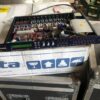
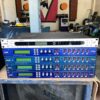
XTA DP446 – Professional 4-Input / 6-Output Loudspeaker Management Processor
The XTA DP446 is a high-performance digital loudspeaker management processor designed for professional touring systems, live productions, fixed installations, and advanced multi-way loudspeaker configurations. Part of the respected XTA 4 Series, the DP446 combines exceptional DSP accuracy, flexible routing architecture, precision crossover control, and powerful loudspeaker protection inside a compact 1U rackmount unit.
Across Europe, professional sound engineers and system integrators continue to trust the XTA DP446 because of its transparent audio quality, advanced processing flexibility, and proven reliability in demanding professional environments.
In modern sound reinforcement systems, DSP quality directly affects crossover coherence, vocal clarity, stereo imaging, system protection, and audience experience. This is why processors like the DP446 remain essential in serious professional audio systems.
Designed for Touring & Professional Installations
The XTA DP446 is widely used in:
- touring sound systems
- music festivals
- theatres and auditoriums
- houses of worship
- clubs and nightlife venues
- distributed audio systems
- concert touring racks
- delay tower configurations
- monitor systems
- corporate AV installations
Its flexible 4-input / 6-output architecture makes it highly suitable for complex loudspeaker management applications where detailed control and precise system alignment are critical.
Many experienced touring engineers prefer the DP446 because it provides extensive DSP capability while remaining compact, lightweight, and highly reliable.
High-Resolution 96 kHz DSP Processing
One of the biggest strengths of the XTA DP446 is its extremely accurate audio processing architecture.
The processor features:
- native 96 kHz sampling rate
- 24-bit A/D and D/A conversion
- dynamic range exceeding 116 dB
- extended frequency response beyond 30 kHz
- ultra-low distortion performance below 0.001% THD
This allows the DP446 to maintain highly transparent signal reproduction even in demanding high-output sound systems.
Poor DSP quality can negatively affect:
- crossover integration
- transient response
- low-frequency accuracy
- vocal intelligibility
- stereo imaging
The DP446 was engineered specifically to avoid these problems through precision digital processing and advanced filter implementation.
Flexible 4×6 Matrix Routing Architecture
The XTA DP446 offers:
- four balanced inputs
- six balanced outputs
- fully flexible matrix routing
Any input can be routed to any output or combination of outputs, making the processor ideal for:
- multi-way loudspeaker systems
- delay towers
- monitor routing
- distributed speaker systems
- subwoofer management
- zone-based installations
This flexibility is especially important in large venues and touring applications where multiple loudspeaker zones require independent processing and alignment.
Advanced Input Processing Tools
Each input channel provides extensive DSP functionality for detailed tonal shaping and system optimization.
Input processing features include:
- 28-band graphic EQ
- 8 parametric EQ bands
- multiple filter response types
- notch filtering
- shelving filters
- all-pass filters
- elliptic filtering
- variable Q adjustment
- phase adjustment in 2° increments
This level of processing allows engineers to precisely optimize source material and room interaction before routing signals into output processing chains.
Experienced system engineers understand that detailed input processing is critical for achieving balanced system performance in difficult acoustic environments.
Powerful Output DSP & Crossover Management
Each of the six output channels includes advanced loudspeaker management functionality such as:
- up to 9 parametric EQ bands
- crossover filtering
- output gain adjustment
- polarity switching
- channel mute control
- precision delay alignment
Crossover filters support:
- 6 dB/octave slopes
- 12 dB/octave slopes
- 18 dB/octave slopes
- 24 dB/octave slopes
- up to 48 dB/octave filter configurations
Available crossover curve types include:
- Butterworth
- Bessel
- Linkwitz-Riley
This level of flexibility allows the DP446 to integrate with virtually any professional loudspeaker system configuration.
Precision Delay Alignment & Phase Accuracy
The XTA DP446 provides extremely accurate delay management with:
- maximum delay up to 650 ms
- ultra-fine 0.325 µs resolution
Precise delay alignment is essential for:
- subwoofer integration
- line array timing
- front-fill alignment
- delay tower synchronization
- monitor systems
- distributed loudspeaker zones
Even small timing inconsistencies can negatively impact phase coherence and system intelligibility.
The DP446 allows engineers to achieve extremely accurate loudspeaker timing relationships across complex sound systems.
Advanced Loudspeaker Protection
Professional loudspeaker systems represent major financial investments, making reliable DSP protection extremely important.
The DP446 includes a two-stage protection architecture featuring:
- individual channel peak limiting
- system-wide D-Max look-ahead limiting
- adjustable limiter thresholds
- configurable attack and release settings
- intelligent system protection algorithms
These protection systems help prevent:
- clipping damage
- thermal overload
- driver failure
- accidental overdrive conditions
Experienced touring professionals understand that proper DSP limiting directly affects loudspeaker longevity and system stability.
Grouping & System Management Flexibility
The DP446 supports channel grouping functions, allowing engineers to synchronize:
- delay settings
- EQ adjustments
- crossover parameters
- output configurations
This greatly improves efficiency when managing large-scale systems requiring multiple outputs with identical or linked processing structures.
For touring productions and complex installations, fast configuration control can dramatically reduce setup time.
Remote Control & Connectivity
The XTA DP446 offers professional connectivity including:
- analog or AES/EBU input options
- analog or AES/EBU output options
- remote software control
- realtime parameter adjustment
- touring system integration
The processor supports remote management of:
- EQ
- crossover settings
- delay
- routing
- limiter configuration
- output control
This level of flexibility is highly valuable in both live production and permanent installation environments.
Compact Touring-Friendly Design
Despite its advanced DSP architecture, the DP446 remains compact and highly portable.
| Feature | Specification |
|---|---|
| Rack Size | 1U 19” Rackmount |
| Dimensions | 44 × 482 × 305 mm |
| Weight | Approx. 3.5 kg |
| Power Input | 60–240 VAC IEC |
| Power Consumption | Less than 40 W |
Its lightweight design makes it highly suitable for touring racks and mobile production systems.
Ideal Applications for the XTA DP446
The processor is ideal for:
- touring loudspeaker systems
- monitor mixing setups
- delay tower alignment
- active multi-way speaker systems
- concert production
- houses of worship
- theatres and performance venues
- distributed installation systems
Many professional venues across Europe continue to rely on XTA processors because of their reputation for precision, reliability, and transparent audio quality.
Why Professionals Choose the XTA DP446
Experienced audio engineers continue to choose the DP446 because it combines:
- pristine audio transparency
- advanced DSP flexibility
- precision crossover management
- ultra-accurate delay alignment
- powerful loudspeaker protection
- touring-grade reliability
- scalable system management
In professional sound reinforcement, DSP quality often determines how well an entire loudspeaker system performs in real-world conditions.
This is why serious engineers avoid generic processors and invest in proven professional DSP platforms instead.
Strong Demand Across Europe
The XTA DP446 remains highly respected throughout the European professional audio market, especially in countries such as:
- Germany
- Netherlands
- France
- Belgium
- Spain
- Italy
- Austria
XTA processors continue to maintain a strong reputation among touring engineers, festival production companies, and installation specialists across Europe.
Safe Delivery Across Europe
Professional DSP processors require careful transport and secure packaging.
Important advantages include:
- professional packaging
- secure European shipping
- lightweight touring format
- rack-ready installation design
- durable long-term construction
Proper logistics are essential when transporting professional audio control equipment.
Conclusion
The XTA DP446 remains one of the most respected professional DSP loudspeaker management processors for touring systems, concert production, and advanced installation environments.
Its combination of pristine 96 kHz audio processing, flexible routing, precision crossover management, advanced loudspeaker protection, and touring-grade reliability makes it an exceptional choice for professional audio engineers across Europe.
For touring companies, festivals, theatres, clubs, houses of worship, and large-scale installations seeking accurate loudspeaker optimization and dependable DSP control, the DP446 continues to deliver outstanding professional performance.
Frequently Asked Questions
What is the XTA DP446?
The XTA DP446 is a professional 4-input / 6-output DSP loudspeaker management processor designed for touring systems, installations, and advanced speaker control.
What does the DP446 control?
The processor manages EQ, crossover filters, routing, delay alignment, loudspeaker protection, and output limiting.
Is the XTA DP446 suitable for touring systems?
Yes. Its compact 1U design, advanced DSP architecture, and reliable construction make it highly suitable for professional touring applications.
Can the DP446 manage multi-way loudspeaker systems?
Yes. The processor is ideal for active multi-way loudspeaker configurations and advanced crossover management.
Why do professionals use DSP loudspeaker processors?
Professional DSP processors provide precise crossover alignment, loudspeaker protection, delay management, EQ optimization, and improved overall sound system performance.
Be the first to review “XTA DP 446”
Related products
Funktion One
Funktion One
Funktion One

Funktion One
PowerSoft
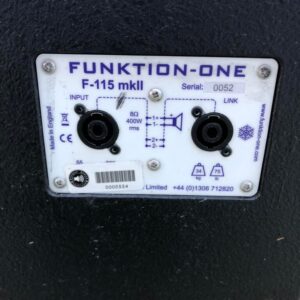
Funktion One
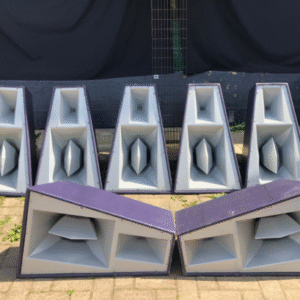
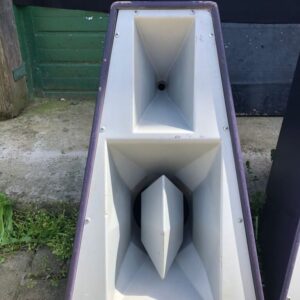
Funktion One
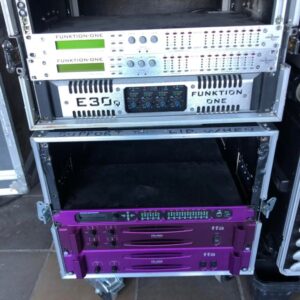
Funktion One
Reviews
There are no reviews yet.